

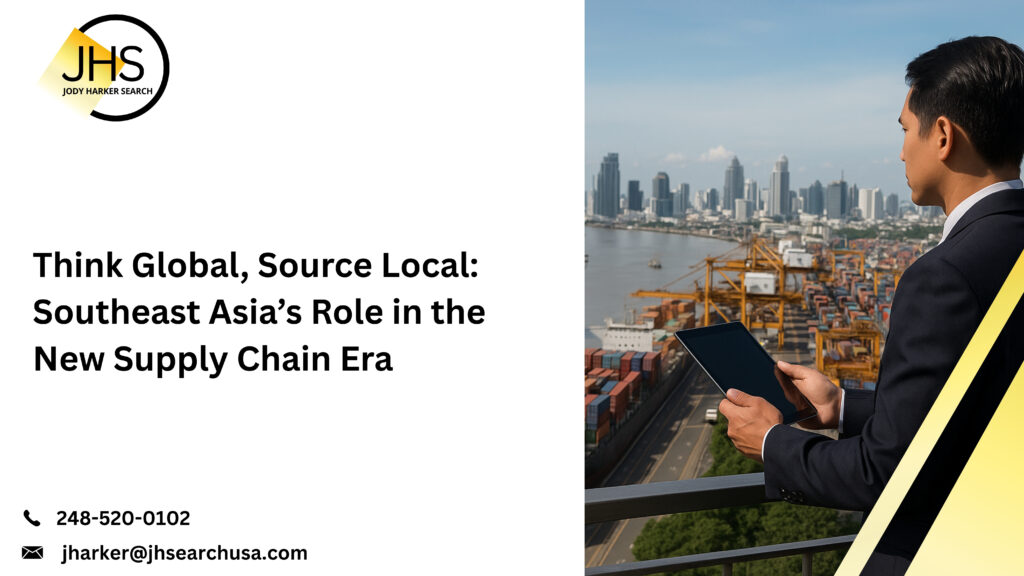
In today’s rapidly evolving global economy, supply chains are undergoing a significant transformation. Amid geopolitical tensions, pandemic aftershocks, and increased demand for resilience, companies are rethinking their sourcing strategies. The spotlight has now shifted towards Southeast Asia — a region once considered merely a manufacturing alternative, but now emerging as a strategic centerpiece in the global supply chain network.
Why the Shift?
The traditional model of sourcing heavily from China is being re-evaluated. Rising labor costs, stricter trade policies, and the need for risk diversification have forced businesses to look beyond the usual hubs. Southeast Asia presents an attractive proposition — not just as a backup, but as a vital node for global trade and production.
A Strategic Location with Global Access
Geographically, Southeast Asia sits at the heart of one of the busiest maritime trade routes. Countries like Vietnam, Thailand, Malaysia, and Indonesia offer seamless access to both Asian and Western markets. This unique positioning reduces shipping times and costs, giving companies a competitive edge in time-sensitive industries.
Cost-Effective and Skilled Workforce
Labor in Southeast Asia remains more cost-effective compared to China and many Western countries. But it’s not just about affordability — the region has steadily invested in upskilling its workforce. With growing expertise in electronics, textiles, and high-tech manufacturing, Southeast Asia has become a powerhouse of productivity and innovation.
Government Support and Trade Agreements
Several Southeast Asian countries have introduced investor-friendly policies to attract foreign direct investment (FDI). Trade agreements like the Regional Comprehensive Economic Partnership (RCEP) and participation in ASEAN Free Trade Area (AFTA) enhance the region’s appeal. These agreements help reduce tariffs and streamline customs, making cross-border trade easier and more efficient.
Supply Chain Resilience Through Localization
Local sourcing in Southeast Asia doesn’t just mean cheaper goods — it means smarter supply chains. The pandemic taught businesses the hard lesson of over-dependence. By building regional hubs in Southeast Asia, companies can localize part of their production and distribution networks, creating more resilient and flexible operations.
Sustainability and Ethical Sourcing
Consumers today demand more than just affordable products; they want ethical and sustainable practices. Southeast Asian governments are encouraging green manufacturing and responsible sourcing through environmental policies and incentives. This aligns well with companies looking to enhance their ESG (Environmental, Social, Governance) footprint.
Technology and Digital Transformation
Southeast Asia is not being left behind in the digital race. From smart factories to blockchain-enabled logistics, the region is embracing technology to make supply chains more transparent and efficient. Countries like Singapore and Malaysia are leading the way in digitization, providing scalable models for neighboring countries to follow.
The Road Ahead
As businesses strive to balance cost, speed, and sustainability, the phrase “Think Global, Source Local” becomes more relevant than ever. Southeast Asia is no longer just a regional player — it’s becoming a global game-changer.
In this new supply chain era, companies that integrate Southeast Asia into their sourcing strategy aren’t just hedging risks — they’re setting themselves up for long-term growth, agility, and competitive advantage.
Conclusion
The new age of global trade is about building smarter, more adaptive supply chains. Southeast Asia’s rise as a sourcing destination is not a temporary trend, but a structural shift in how the world does business. Those who recognize and act on this opportunity will be better equipped to thrive in the unpredictable terrain of global commerce.