
Jody Harker Search

Author name: Prince Shah

Uncategorized

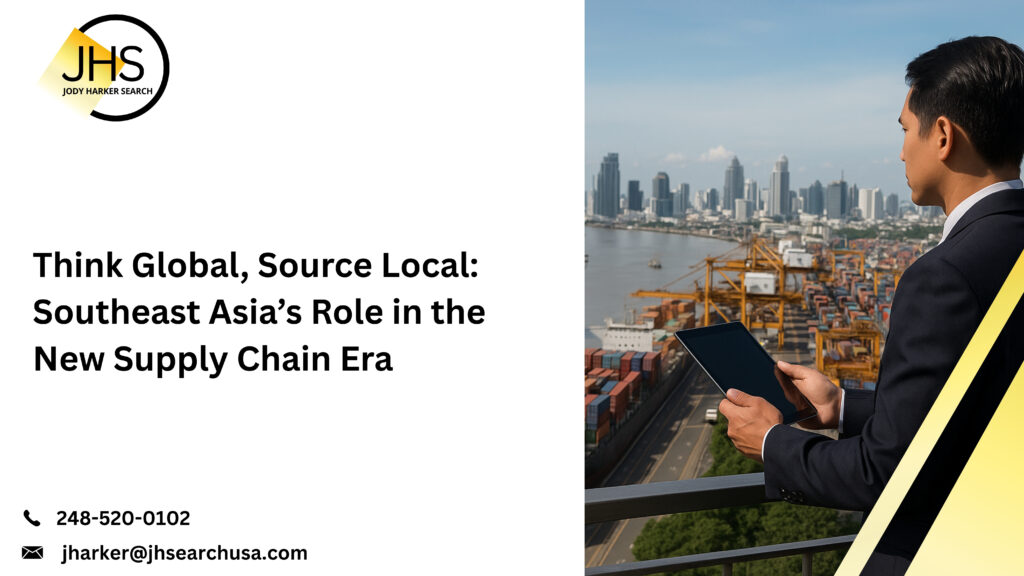
Think Global, Source Local: Southeast Asia’s Role in the New Supply Chain Era

In today’s rapidly evolving global economy, supply chains are undergoing a significant transformation. Amid geopolitical tensions, pandemic aftershocks, and increased demand for resilience, companies are rethinking their sourcing strategies. The spotlight has now shifted towards Southeast Asia — a region once considered merely a manufacturing alternative, but now emerging as a strategic centerpiece in the global supply chain network. Why the Shift? The traditional model of sourcing heavily from China is being re-evaluated. Rising labor costs, stricter trade policies, and the need for risk diversification have forced businesses to look beyond the usual hubs. Southeast Asia presents an attractive proposition — not just as a backup, but as a vital node for global trade and production. A Strategic Location with Global Access Geographically, Southeast Asia sits at the heart of one of the busiest maritime trade routes. Countries like Vietnam, Thailand, Malaysia, and Indonesia offer seamless access to both Asian and Western markets. This unique positioning reduces shipping times and costs, giving companies a competitive edge in time-sensitive industries. Cost-Effective and Skilled Workforce Labor in Southeast Asia remains more cost-effective compared to China and many Western countries. But it’s not just about affordability — the region has steadily invested in upskilling its workforce. With growing expertise in electronics, textiles, and high-tech manufacturing, Southeast Asia has become a powerhouse of productivity and innovation. Government Support and Trade Agreements Several Southeast Asian countries have introduced investor-friendly policies to attract foreign direct investment (FDI). Trade agreements like the Regional Comprehensive Economic Partnership (RCEP) and participation in ASEAN Free Trade Area (AFTA) enhance the region’s appeal. These agreements help reduce tariffs and streamline customs, making cross-border trade easier and more efficient. Supply Chain Resilience Through Localization Local sourcing in Southeast Asia doesn’t just mean cheaper goods — it means smarter supply chains. The pandemic taught businesses the hard lesson of over-dependence. By building regional hubs in Southeast Asia, companies can localize part of their production and distribution networks, creating more resilient and flexible operations. Sustainability and Ethical Sourcing Consumers today demand more than just affordable products; they want ethical and sustainable practices. Southeast Asian governments are encouraging green manufacturing and responsible sourcing through environmental policies and incentives. This aligns well with companies looking to enhance their ESG (Environmental, Social, Governance) footprint. Technology and Digital Transformation Southeast Asia is not being left behind in the digital race. From smart factories to blockchain-enabled logistics, the region is embracing technology to make supply chains more transparent and efficient. Countries like Singapore and Malaysia are leading the way in digitization, providing scalable models for neighboring countries to follow. The Road Ahead As businesses strive to balance cost, speed, and sustainability, the phrase “Think Global, Source Local” becomes more relevant than ever. Southeast Asia is no longer just a regional player — it’s becoming a global game-changer. In this new supply chain era, companies that integrate Southeast Asia into their sourcing strategy aren’t just hedging risks — they’re setting themselves up for long-term growth, agility, and competitive advantage. Conclusion The new age of global trade is about building smarter, more adaptive supply chains. Southeast Asia’s rise as a sourcing destination is not a temporary trend, but a structural shift in how the world does business. Those who recognize and act on this opportunity will be better equipped to thrive in the unpredictable terrain of global commerce.

Shaping Smarter Buying Decisions: How Predictive Analytics is Transforming Procurement in 2025
Uncategorized

Shaping Smarter Buying Decisions: How Predictive Analytics is Transforming Procurement in 2025

As we delve further into the digital age, the procurement world is changing faster than ever. Older ways of buying, dependent on experience and gut feeling, are being replaced by the strength of technology. Predictive analytics in 2025 is no longer a choice—it’s becoming an integral part of transforming how companies make buying decisions. This revolution allows procurement teams to work smarter, quicker, and more effectively than ever. The Rise of Predictive Analytics in Procurement Predictive analytics involves using statistical algorithms, machine learning, and data mining to examine existing and past data and predict future outcomes. In procurement, this technology can assist businesses in forecasting demand, optimizing supplier relationships, and better managing risk. For decades, procurement teams have struggled with cost volatility, supply chain disruptions, and poor demand forecasting. In 2025, predictive analytics will solve these issues by offering data-driven insights that result in more informed buying decisions. Companies can predict trends, anticipate disruptions, and make better buying decisions by analyzing large volumes of data. Enhancing Decision-Making with Data-Driven Insights Previously, procurement decisions were frequently made on intuition or past patterns. Yet using only intuition can result in lost opportunities or expensive errors. Predictive analytics shifts this by utilizing real-time information to inform decision-making processes. For instance, through machine learning models, organizations can forecast which suppliers will most likely make deliveries on time and at optimal cost while detecting possible risks that might affect delivery timetables. Further, predictive analytics aids companies in detecting patterns in consumption behavior that aren’t necessarily readily apparent. A company, for example, could utilize predictive models to know when demand for a particular product would be likely to spike, enabling them to purchase in bulk at a cheaper rate and ultimately save. By analyzing historical data, predictive analytics can identify inefficiencies in the buying process, allowing companies to improve their purchasing cycles and minimize wastage. Streamlining Supplier Management Supplier management is another field in which predictive analytics has a significant impact. Historically, procurement teams spent much time manually evaluating supplier performance, negotiating contracts, and managing relationships. In 2025, predictive analytics is automating much of this, providing insights into supplier reliability, performance, and risk. Companies can more accurately assess possible suppliers by examining data from various touchpoints, such as on-time delivery, product quality, and adherence to contractual agreements. This forward-looking vision enables companies to manage their supplier relationships ahead of time, ensuring they partner with companies that consistently meet their performance standards. In addition, predictive analytics can enable procurement teams to develop more durable supply chains. Organizations can take proactive steps by predicting anticipated disruptions, such as natural disasters or political unrest, by diversifying suppliers or manipulating inventory levels to avoid harm from these issues. Optimizing Inventory Management Good inventory management is essential to a business’s ability to fulfill customer demand without overstocking or understocking products. Predictive analytics is revolutionizing inventory management by providing more precise demand forecasting. Companies can more accurately forecast future demand by examining past sales data, customer patterns, and external factors. This predictive capability enables procurement teams to realign their purchasing strategies accordingly. For instance, if predictive analytics predicts a fall in demand for a particular product, companies can reduce orders to prevent overstocking. On the other hand, if demand is forecasted to increase, companies can ramp up their buying efforts to have the correct products in stock. By doing so, predictive analytics assists companies in holding ideal levels of inventory, saving them money and increasing efficiency. Reducing Risk and Increasing Agility In today’s interconnected economy, procurement teams are confronted with increasingly high risks—from supply chain interruptions to volatile material prices. Predictive analytics helps companies identify and counteract these threats before they become issues. By examining data from various platforms, companies can predict possible risks and execute preemptive action to evade or reduce them. For instance, predictive analytics may spot the risk of supplier failure or the effect of a future price increase in raw materials. Procurement teams will be able to make better decisions, such as diversifying their supply base or fixing prices with long-term contracts, to contain the risks arising from price fluctuations. In addition, predictive analytics allows organizations to be responsive. With proper, data-supported insights, purchasing teams can more quickly react to changes in the market and customers’ evolving needs, helping organizations stay ahead and responsive to a fast-moving environment. Conclusion As we enter 2025, predictive analytics is no longer a buzzword in procurement—it’s a game-changer. By harnessing the strength of data, procurement teams are making better, more informed purchasing decisions that increase efficiency, decrease risk, and maximize costs. With the continuous developments in machine learning, artificial intelligence, and data analytics, the future of procurement is brighter than ever, providing unlimited opportunities for companies to enhance their procurement process and achieve long-term success. For more details, visit : USA Today’s article on Procurement in 2025: How Predictive Analytics Shapes Smarter Buying Decisions.

Uncategorized

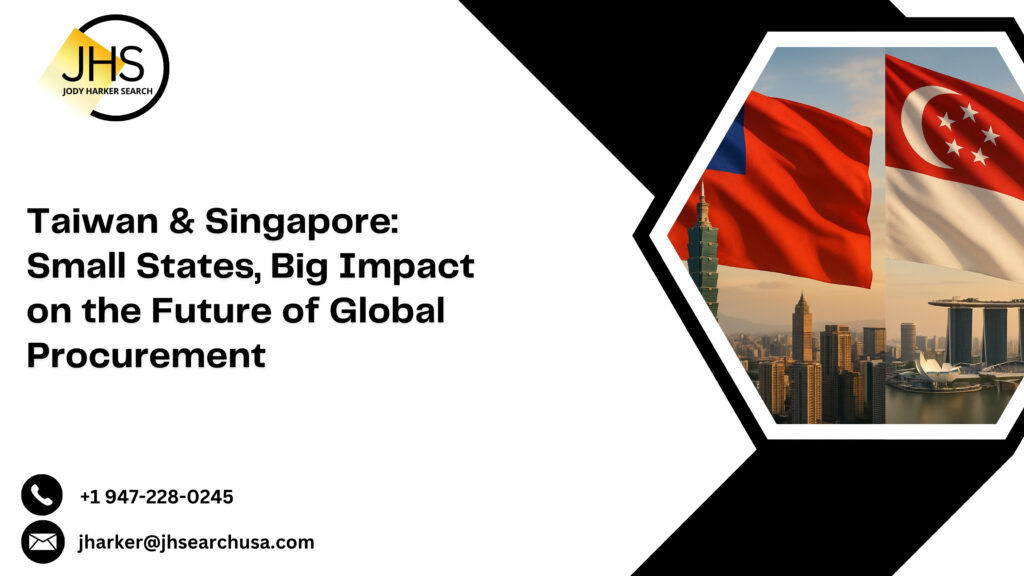
Taiwan & Singapore: Small States, Big Impact on the Future of Global Procurement

When we talk about global powerhouses in procurement, it’s easy to default to names like the United States, China, or Germany. But quietly and consistently, smaller nations like Taiwan and Singapore have carved out pivotal roles in shaping the future of global procurement. Though they may be small in landmass and population, these nations punch far above their weight in efficiency, innovation, and strategic influence. Strategic Location Meets Smart Policy One of the biggest advantages both Taiwan and Singapore share is their geographical location. Taiwan sits in the heart of East Asia, acting as a bridge between major markets like China, Japan, and Southeast Asia. Meanwhile, Singapore is often referred to as the “Gateway to Asia”, with world-class port facilities and air connectivity that support its role as a procurement and logistics hub. But location alone doesn’t cut it. What sets these nations apart is smart governance. Singapore, for instance, is known for its transparent policies, robust regulatory framework, and pro-business environment. It consistently ranks high on the World Bank’s Ease of Doing Business index. Taiwan has invested heavily in technological infrastructure, enabling businesses to source, manufacture, and deliver with unmatched precision. Tech-Driven Procurement Transformation Both countries have recognized that the future of procurement lies in digital transformation. Taiwan’s dominance in semiconductor manufacturing—home to industry giants like TSMC—gives it immense leverage in the global supply chain. Its advanced tech ecosystem enables real-time data integration, predictive analytics, and AI-powered sourcing strategies that are redefining how procurement decisions are made. Singapore, on the other hand, has turned into a testbed for smart procurement systems. From blockchain-enabled logistics to AI-driven supplier selection tools, Singaporean firms are embracing innovation not just to reduce costs, but to boost resilience and agility. This is especially important in a world where supply chain disruptions have become more common due to geopolitical tensions and climate change. A Talent Magnet for Procurement Leaders In the modern procurement landscape, talent is as valuable as technology. Both Taiwan and Singapore boast highly skilled workforces, particularly in tech, engineering, and operations management. Their education systems are aligned with industry needs, and they actively attract international talent through favorable visa policies and competitive wages. Additionally, Singapore’s bilingual capabilities (English and Mandarin) give it a cultural advantage in bridging Western and Asian markets. Taiwan’s engineering-heavy talent pool has made it a natural fit for high-tech industries seeking procurement professionals who can speak the language of both business and technology. Sustainability: A Shared Vision Sustainability is no longer optional in procurement. Both Taiwan and Singapore have committed to green procurement practices and supply chain decarbonization. Singapore’s Green Plan 2030 and Taiwan’s net-zero roadmap show how serious these nations are about integrating environmental, social, and governance (ESG) principles into procurement decisions. This focus on sustainability is turning them into preferred partners for companies worldwide that are under pressure to meet ESG goals and align with eco-conscious suppliers. The Global Ripple Effect What happens in Taiwan and Singapore doesn’t stay in Taiwan and Singapore. Their policies, innovations, and standards are influencing global procurement strategies. By championing digital tools, nurturing skilled talent, and setting sustainability benchmarks, these nations are helping reshape procurement from a cost-saving function to a strategic growth driver. In an increasingly volatile and interconnected world, companies are rethinking where and how they source. And more often than not, they’re looking to these two agile economies for answers. Conclusion Taiwan and Singapore may be small in size, but their impact on global procurement is monumental. As businesses aim for smarter, more resilient, and responsible sourcing practices, these two nations offer a blueprint worth watching and emulating. The future of procurement is lean, digital, and globally integrated and these small states are leading the charge.

Uncategorized

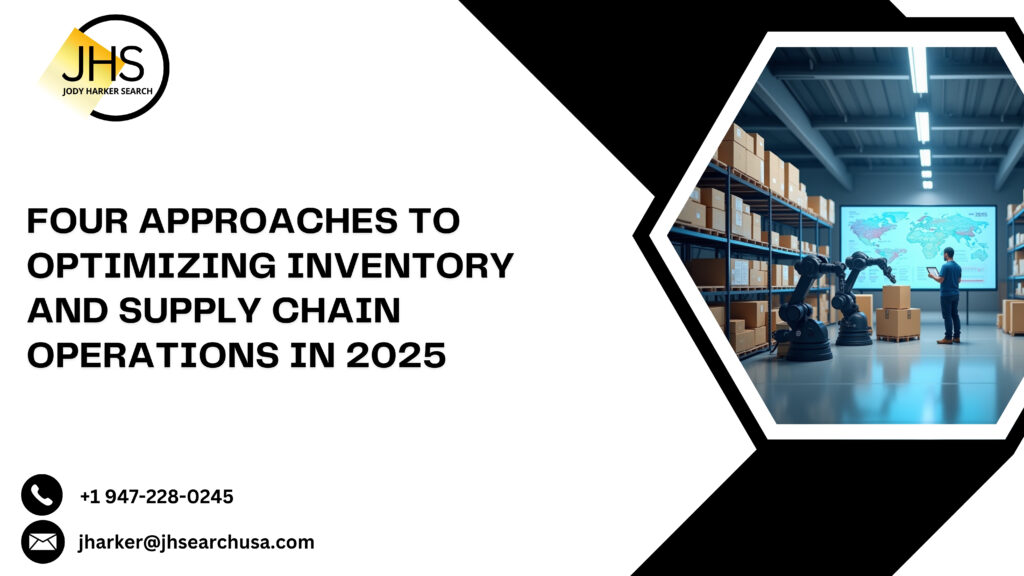
Four Approaches to Optimizing Inventory and Supply Chain Operations in 2025

In 2025, the inventory and supply chain management landscape is changing quickly, fueled by technology, changing consumer needs, and increasing demands for sustainability. As companies struggle to keep up with these changes, inventory and supply chain optimization becomes a strategic imperative and a key to success. To stay competitive and effective, businesses must embrace innovative strategies that align with the complexity of today’s supply chain. The following are four essential strategies to maximize inventory and supply chain operations in 2025. 1. Harnessing the Power of Artificial Intelligence (AI) and Automation Artificial Intelligence (AI) and automation are no longer futuristic technologies; they are here and have begun transforming how businesses approach inventory and supply chain management. In 2025, AI-driven tools will continue to enhance demand forecasting, allowing companies to predict inventory needs with greater accuracy and reduce stockouts or overstock situations. AI algorithms analyze vast amounts of data in real time, providing insights that enable better decision-making. Conversely, automation helps streamline warehouse operations, minimize human error, and speed up fulfillment. Automated warehouses equipped with robotics and AI can efficiently manage tasks like picking, sorting, and packing, freeing human resources for more complex tasks. For businesses, this means lower labor costs, improved operational efficiency, and more agile supply chain processes that can quickly respond to market changes. 2. Leveraging Data Analytics for Real-Time Insights Data analytics is an essential tool for today’s supply chains. In 2025, businesses need to prioritize incorporating data analytics to obtain real-time insights into supply chains. By gathering information from all stages of the supply chain, from procurement and manufacturing to delivery, companies can track performance, detect inefficiencies, and fine-tune their processes. Real-time data enables companies to monitor inventory levels, transport routes and even forecast possible interruptions. Businesses can immediately respond to changing demand, reduce delays, and prevent stockouts through data-based insights to guide decision-making. Data analytics also helps collaborate with suppliers through shared insights, enhanced transparency, and improved communication throughout the supply chain. 3. Implementing Sustainable Practices Sustainability is becoming a more critical aspect of supply chain management, and in 2025, it will be one of the most essential areas of focus for businesses to maximize their operations. Customers expect more sustainable operations, and companies not catering to environmental issues might lag in a competitive business environment. Therefore, incorporating sustainability into inventory and supply chain planning is no longer a choice; it’s necessary. One of the methods to attain sustainability is maximizing inventory levels to reduce waste. This involves embracing lean inventory strategies aimed at lowering surplus stock and embracing just-in-time (JIT) to order and deliver goods only as they are required. Maximizing transport routes and utilizing environmentally friendly packaging are essential to lowering a firm’s carbon footprint. As companies continue to shift towards a circular economy, embracing sustainable sourcing and production methods will also assist in sustaining a competitive advantage. 4. Strengthening Supply Chain Resilience with Diversified Sourcing Supply chain interruptions are unavoidable, but the secret to limiting them is resilience and flexibility. In 2025, companies need to consider developing more resilient supply chains by diversifying their sources. Reliance on a single supplier or region raises exposure to international disruption caused by natural disasters, geopolitical unrest, or pandemics. By increasing their base of suppliers and bringing in resources from various areas, businesses can diversify risks and guarantee a consistent supply of products. Furthermore, forming strategic partnerships with suppliers and bringing them closer to the supply chain gives firms more control over stock management. This collaboration can enhance innovation, increase efficiency, and enable firms to better respond to unforeseen problems. Conclusion As we transition into 2025, optimizing supply chain and inventory operations is more important than ever. Companies need to adopt technology, data-driven decision-making, sustainability, and resilience to remain competitive and meet consumers’ demands. By leveraging AI and automation, utilizing real-time data analytics, using sustainable practices, and diversifying sourcing approaches, organizations can optimize their supply chain performance and succeed in the complexity of the modern marketplace. The future of supply chain management is dynamic, but those who adapt and innovate will be well-positioned for success in 2025 and beyond. You can refer to this link for more insights on inventory management and best practices for supply chain operations.

Scroll to Top